
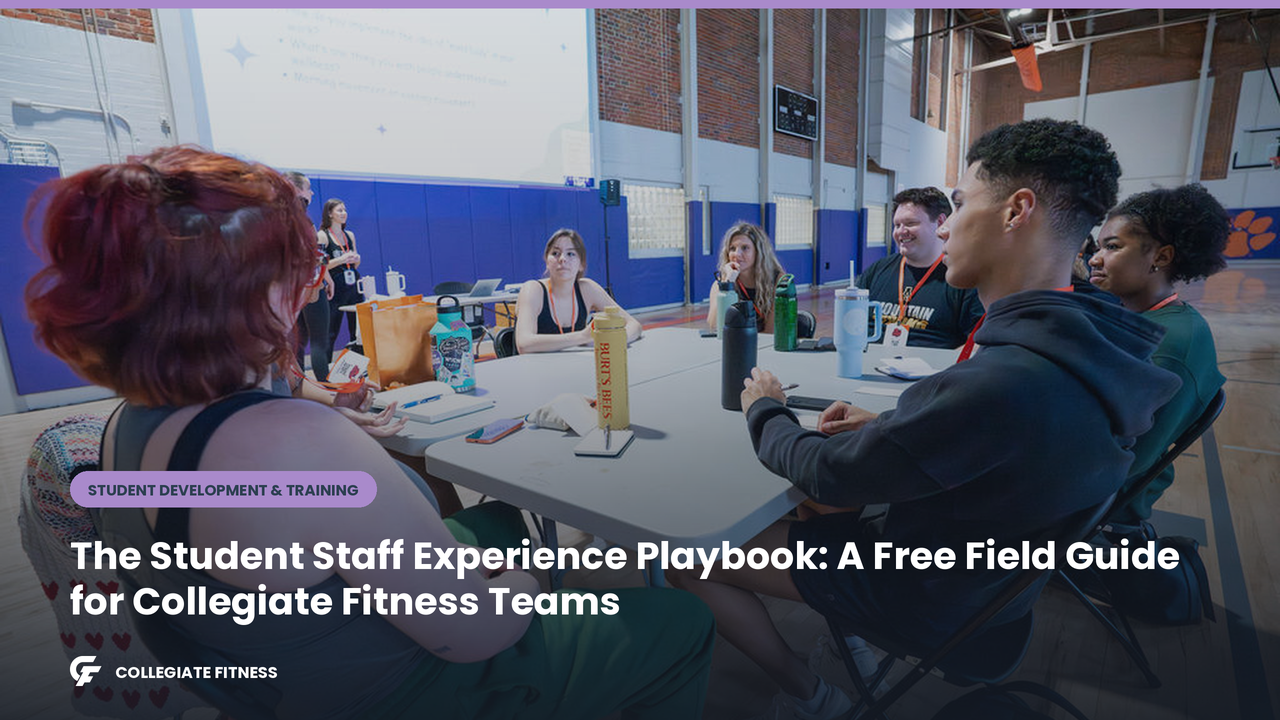
Every semester, some of your strongest student staff walk across a stage and out of your building. That isn't a retention failure. That's the job.
The real question is what stays when they go: the member relationships they built, the way they trained the new hire, the facility quirks only they knew...
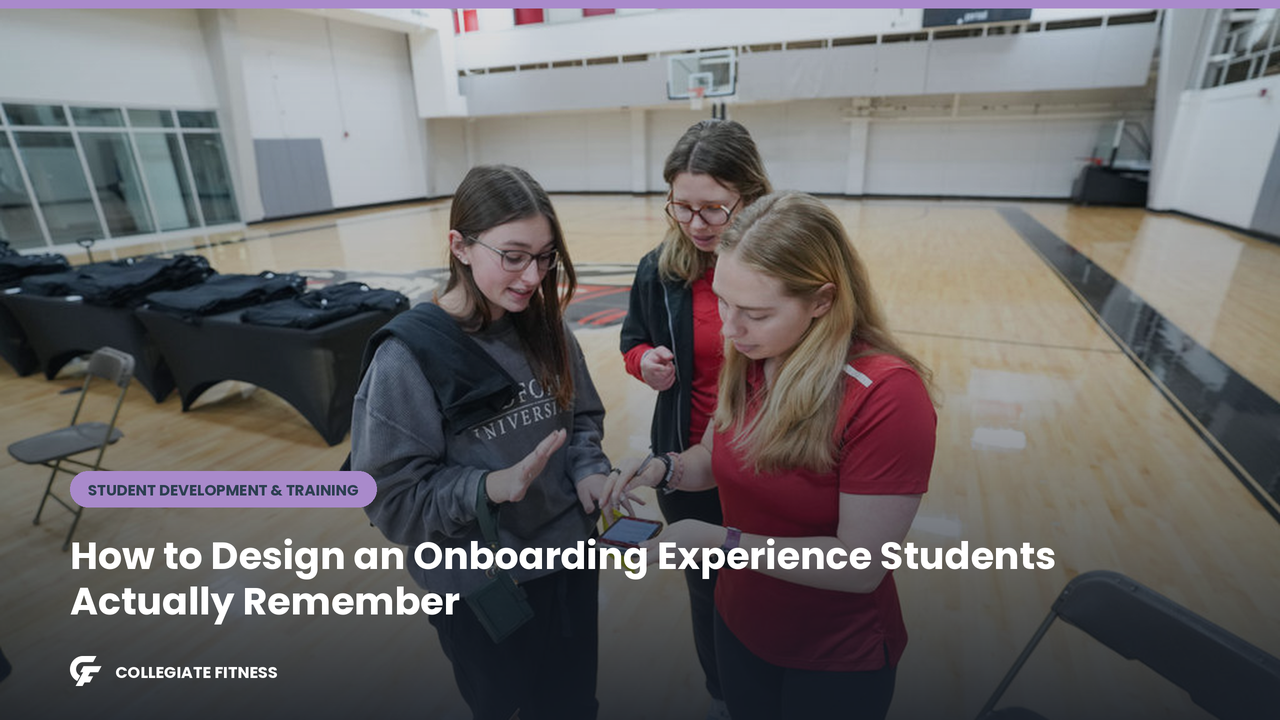
Most new student employees in collegiate recreation can recall almost nothing specific about their first week on the job. Ask them to describe it a year later, and you'll get vague fragments: a stack of paperwork, a tour of the building, maybe a name tag handed over without much ceremony. This isn't...
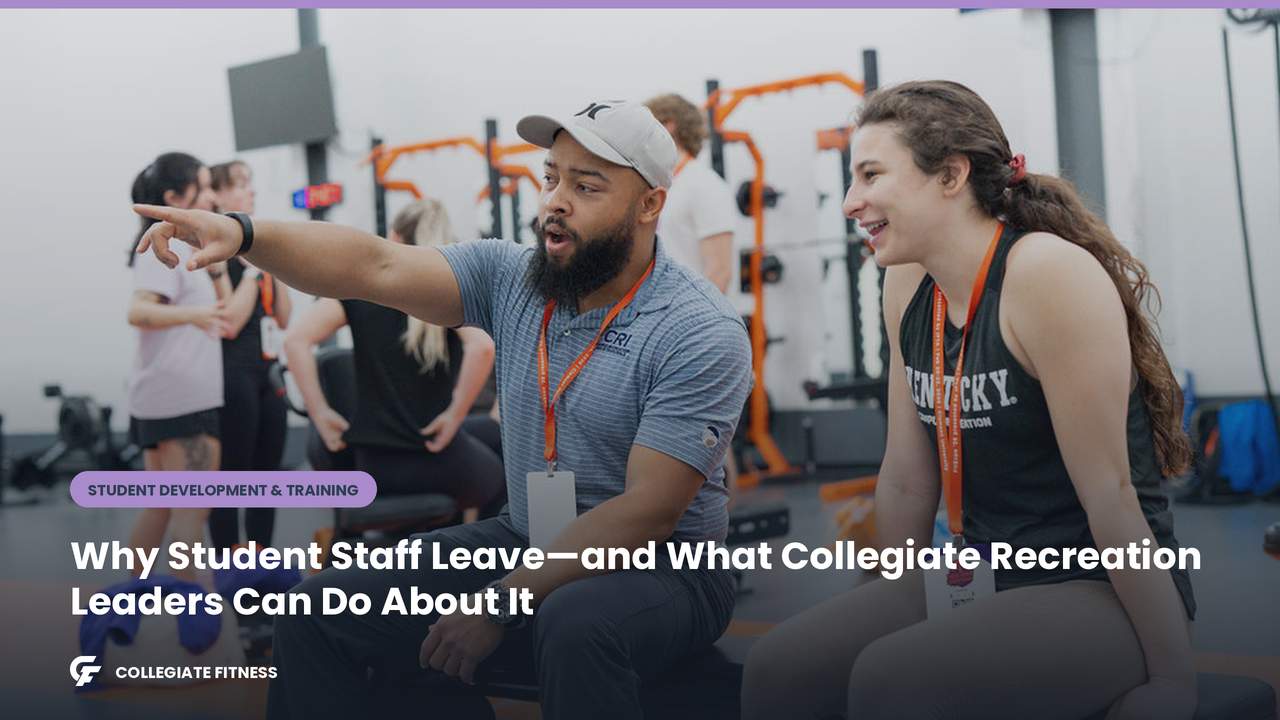
Exit interviews in collegiate recreation tend to produce the same short, unsatisfying list of reasons a student employee is walking away: schedule conflicts, a heavier course load, a job off campus that pays better. Supervisors write the reason down, file the paperwork, and post the position again, ...

Ask a member services desk to describe the worst complaint they've fielded this month, and you'll get an answer that sounds almost too small to matter: the pool is two degrees too hot. Not an injury. Not a facility hazard. Two degrees. And yet the member delivering that complaint is rarely actually ...
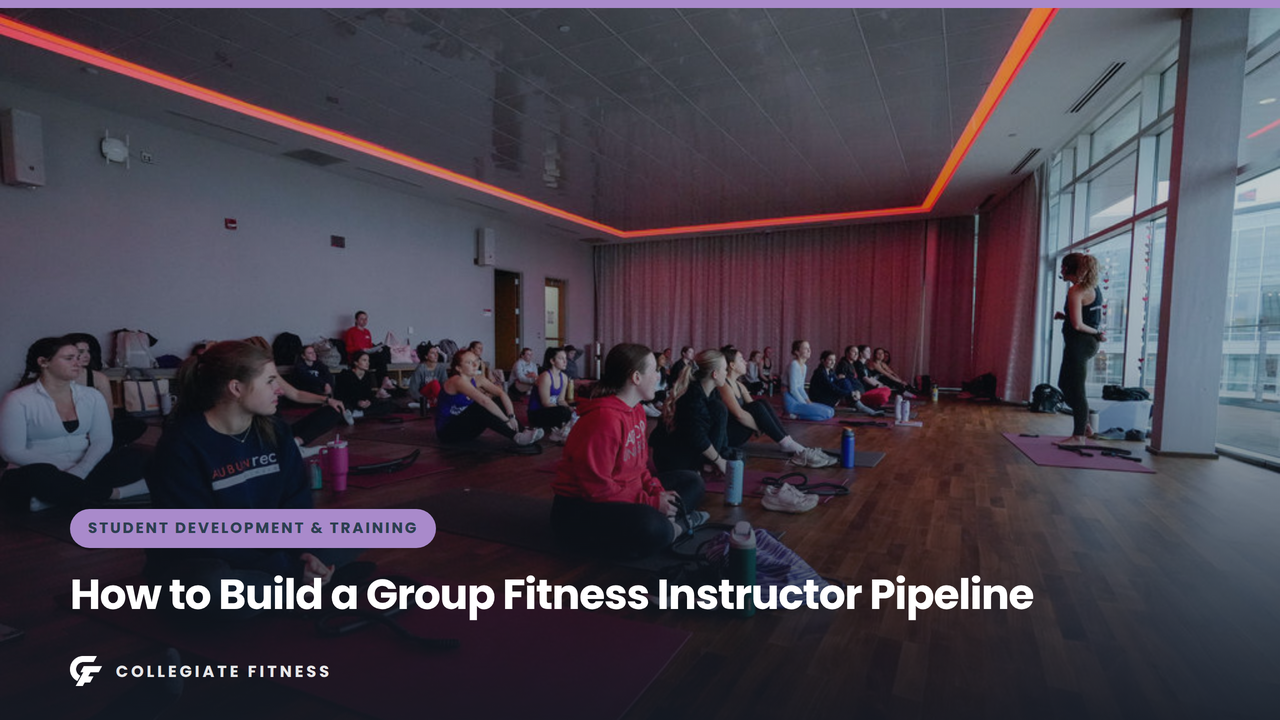
Every spring, some version of this happens. Three (or more!) of your strongest instructors graduate in May. One of them was teaching four classes a week and covering subs for everyone else. You knew it was coming, and you still walk into August short, rebuilding the schedule around whoever is left a...
There's a specific complaint that circulates in almost every campus recreation staff meeting sooner or later, usually delivered with a sigh rather than any real malice: this generation just doesn't have the same work ethic. It gets said about student employees who won't pick up an extra shift. It ge...