Collegiate Fitness Trends: Fall 2026 Planning Insights
Mar 27, 2026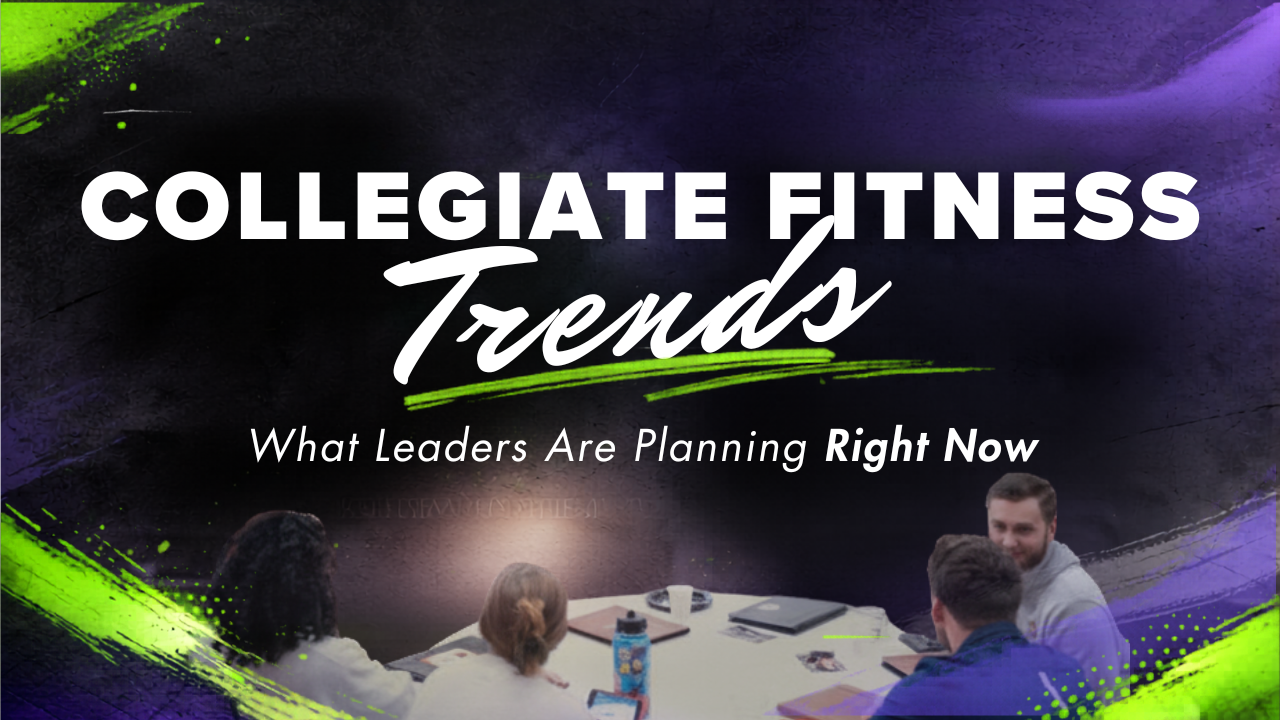
What happens when you put a group of collegiate fitness leaders in a room and ask one simple question: “What are you building for the fall?”
You get a conversation full of ideas, challenges, and real-time innovation.
Our first Fit Friday LIVE session inside the Collegiate Fitness Community brought together leaders from campus recreation and collegiate fitness programs across the country to do exactly that. Step back, compare notes, and sharpen their plans for Fall 2026.
Here’s what’s rising to the top right now.
Pilates Isn’t a Trend. It’s a Movement
If there was one clear headline from this conversation, it’s this: Pilates demand is exploding in collegiate recreation.
Across institutions, we’re seeing:
- Waitlists of 50+ participants
- Hundreds of monthly attendees
- Expanded interest in reformer Pilates programming
But with that growth comes a challenge: consistency and clarity.
Campus recreation programs are evolving from simply offering “Pilates” to more intentional formats:
- Gentle Pilates
- Power Pilates
- Sculpt or cardio-based formats
- Hybrid formats like “Yogilates”
The takeaway: Participants want to know what they’re walking into. Programs that define that clearly are winning.
The Schedule Is Changing Because Students Are Changing
One of the most interesting shifts in collegiate fitness programming: Traditional “dead times” are no longer dead.
- 9 am and 10 am classes are filling up
- 2 pm classes are working
- Midday group fitness programming is back in play
Why? Students are spending less time in structured, in-person academic schedules and more time with flexible or online coursework.
The result: Your group fitness schedule has more opportunities than you think.
Personal Training Is Being Reimagined in Campus Recreation
This might be the most important shift happening right now. Many collegiate recreation programs are moving away from traditional personal training packages and toward:
Subscription-Based Personal Training
Instead of selling sessions, they’re selling:
- Monthly memberships
- 2x per week or 3x per week options
- Long-term engagement instead of short-term transactions
Why it’s working:
- Predictable revenue
- Higher retention
- Stronger client relationships
At the same time, there’s a renewed focus on something many programs have overlooked: Teaching personal trainers how to market themselves.
From pop-up activations to floor engagement, programs are realizing: Trainers are not just service providers. They are part of your marketing strategy.
Marketing in Collegiate Fitness Is About Timing, Not Volume
If you’re still trying to get students to commit weeks in advance, you’re fighting an uphill battle.
What’s working:
- 48 to 72-hour promotion windows
- Real-time messaging
- Tabling and in-person engagement
- Student-led social media content
What’s not:
- Over-planning
- Long lead times
- Passive promotion
And one important nuance for campus recreation professionals:
Not all students behave the same.
- Undergraduate students tend to make last-minute decisions
- Graduate and professional students plan months ahead
The best programs clearly define their target audience and adjust accordingly.
Staffing in Campus Recreation Is Strong. Strategy Matters More
Across the board, collegiate fitness programs are seeing:
- Increased interest in group fitness instructor and personal trainer roles
- Strong pipelines through internal training programs and academies
But that brings a new challenge. What do you do when you have more staff than demand?
Solutions being explored:
- Expanding program offerings
- Increasing trainer visibility and floor engagement
- Creating new revenue streams such as small group training, online coaching, and assessments
At the same time, onboarding and staff development are evolving:
- Hybrid training models using platforms like Canvas and e-learning
- More intentional development of soft and power skills
- Clear systems and resources for consistency across staff
Innovation in Collegiate Fitness Is Happening in Real Time
Some of the most exciting ideas shared across campus recreation programs:
- Weekly SUP Yoga and Pilates instead of monthly events
- Partnerships with academic programs to support new offerings
- Exercise Is Medicine initiatives and assessment centers are driving personal training revenue
- Creative onboarding and student engagement strategies
And maybe most importantly: Leaders are testing, learning, and adjusting quickly.
Final Thought: This Is What Progress Looks Like in Collegiate Fitness
There is no single model right now. There is no perfect playbook. But there is momentum.
Collegiate fitness and campus recreation programs are:
- Rethinking how they deliver services
- Adapting to changing student behavior
- Finding new ways to engage, retain, and grow
And conversations like this, where leaders show up, share openly, and learn from each other, are what move the industry forward.
Want to Be Part of These Conversations?
If you’re a collegiate fitness or campus recreation professional looking to stay ahead of trends, connect with peers, and bring new ideas back to your program, this is exactly what the Collegiate Fitness Community is built for.
Join a growing network of fitness directors and leaders sharing real strategies, insights, and what’s working right now.
Stay Ahead in Collegiate Fitness
Get insights, trends, and real-world strategies from collegiate fitness leaders. Stay connected to what’s working across campus recreation.
We hate SPAM. Unsubscribe at any time.